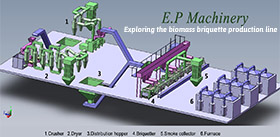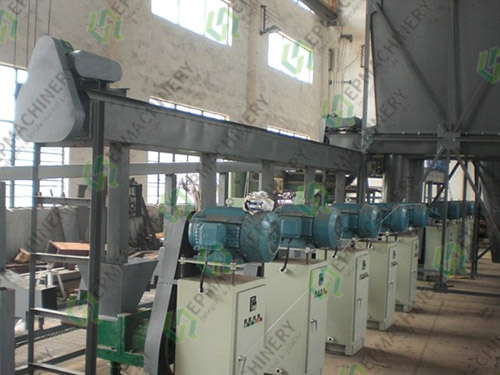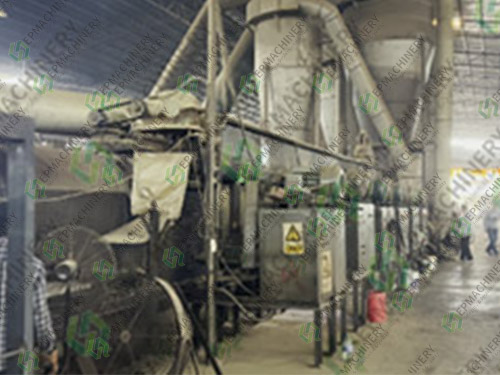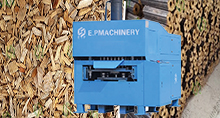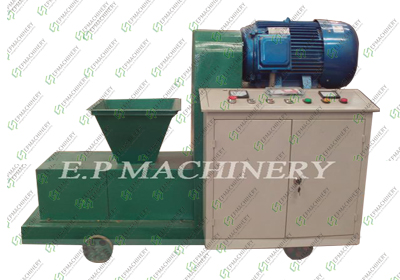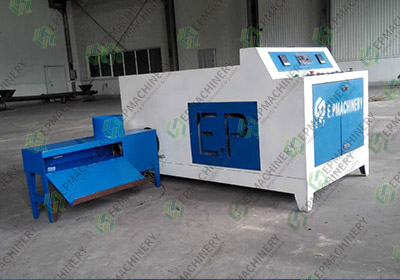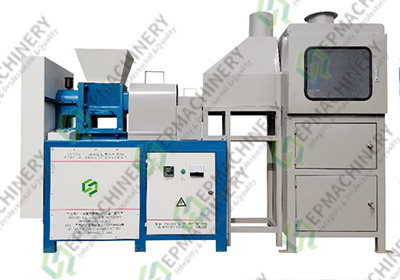
Biomass briquette extruder is a kind of mechanical equipment commonly used to extrude biomass raw materials (such as sawdust, straw, wood chips, etc.) into biomass fuel briquettes with specific shapes, sizes and high density. It mainly extrude briquettes of various shapes by means of screw rotation (more common in screw briquette extruders) or plunger push.
A German customer bought a biomass briquette extruder machine from us after investigation and comparisons with several other biomass briquette extruder machine manufactures. He use sawdust as raw materials.
What are the raw materials suitable for biomass briquette extruder?
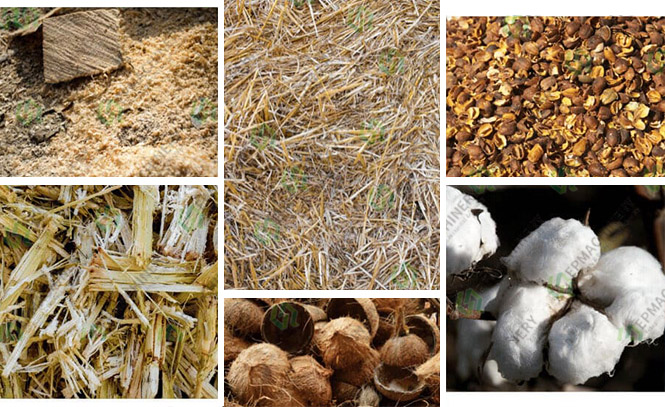
The raw materials suitable for biomass briquette extruder
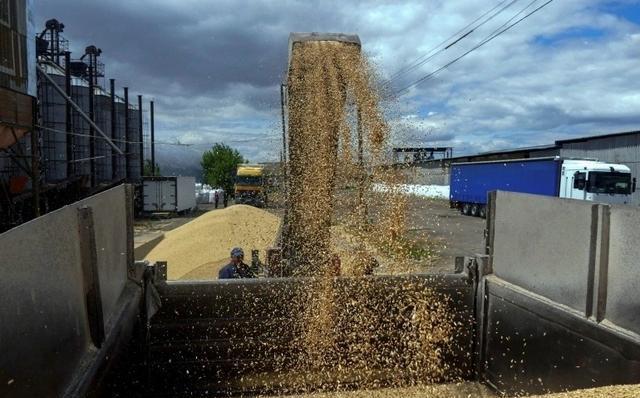
The raw materials of biomass briquette extruder come from a wide range of sources, such as: crop straw (corn straw, wheat straw, rice straw, etc.), forestry waste (branches, wood chips, sawdust, wood, etc.), herbaceous plants (alfalfa, reeds, etc.), and others (nut shells, walnut shells, peanut shells, sugarcane bagasse, etc.).
In actual use, it is often necessary to properly pre-treat the raw materials and use them reasonably according to the specific performance of the biomass briquette extruder and the requirements of the final product.
EP Machinery can provide customized biomass briquette extruders. Email us your raw materials and desired finished product and we will provide you with the best briquetting solution for you. Feel free to visit our company and factory in person.
How to connect and operate Briquette Extruding Machine
This customer is totally a new hand, after receive the machine, he don’t know how to connect the wires even though with wiring diagram we provided to him.
We first used pictures and texts to further explain to the customer how to connect the cables. Also we told him that if he still didn’t understand, our engineers could provide free remote video guidance.
This customer read all the pictures guidance we sent to him and with the pictures and texts we sent to him before, and after a 1-hour video call with the customer, our engineer finally helped this customer successfully connect the wires of the machine.
If you don't know how to operate the biomass briquette extruder, please contact us. We will be happy to help you debug the machine and make high-quality biomass briquette products.
My biomass briquette extruder is not producing briquettes?
After connecting the machine, this customer start to produce. At first this can produce very good briquettes, but after a week, when he produce again, he found the briquettes can’t be produced. He doesn’t understand why, so he came to us and said he use the same raw material, and the machine temperature is the same as last time, why the result is so different.
Our engineers immediately diagnosed that his raw material got damp during that week. The customer did not believe it at first, until he dried the materials again according to our requirements and produce briquettes smoothly again. This machine has very strict requirements on moisture. The raw materials of this customer have absorbed moisture from the air after being left open for a week, so the water content has increased. When the moisture is too high, it can reduce the degree of proper adjustment temperature, too low temperature will not get briquettes.
The following are some possible reasons and solutions for the biomass briquette extruder not producing briquettes(Read More):
- The particle size of the raw material may be too large, resulting in blockage at the feed port or inability to be smoothly conveyed and extruded in the barrel.
- Solution: Grind the raw material more finely to make its particle size meet the requirements of the extruder. You can use a screen to screen out oversized particles and re-grind them before using them.
- If the humidity of the raw material is too high, it will make the material sticky and easy to stick in the barrel, and may even cause the screw to be unable to rotate or the material to be unable to be extruded through the die.
- Solution: First test the humidity of the raw material, you can use a special hygrometer. If the humidity is too high, dry the raw material, and you can use drying equipment or natural drying to reduce the humidity until it reaches the appropriate range.
- It may be that the proportion of the raw material ingredients is not appropriate, resulting in the material being unable to form the bonding structure required for briquette, such as insufficient amount of binder added.
- Solution: Check the formula of the raw materials to ensure that the proportions of various ingredients are correct, especially the amount of binder. Adjust the amount of binder added according to product requirements and experience. If necessary, conduct multiple tests to find the best ratio.
- The screw may be worn or damaged, causing it to be unable to convey and extrude materials normally.
- Solution: Open the shell of the extruder and check the condition of the screw. If it is found to be severely worn, the screw needs to be replaced; if it is partially damaged, you can consider repairing it.
- After long-term use, the die head is easily blocked by impurities in the raw materials, large particles that are not fully mixed, or adhesives, making it impossible for the material to be extruded normally.
- Solution:Turn off the equipment, disassemble the die head, and clean the blockage. Special tools (such as needles, brushes, etc.) can be used.
- Motor failure or transmission parts (such as belts, reducers, etc.) have problems, resulting in insufficient power for the screw, so that the screw cannot rotate normally.
- Solution:Check whether the motor is working properly, check the power connection of the motor, whether the motor winding is damaged, etc. For transmission parts, check whether the belt is loose or slipping. If there is a problem, tighten or replace the belt; check whether the reducer has abnormal noise, oil leakage, etc., and repair or replace it if necessary.